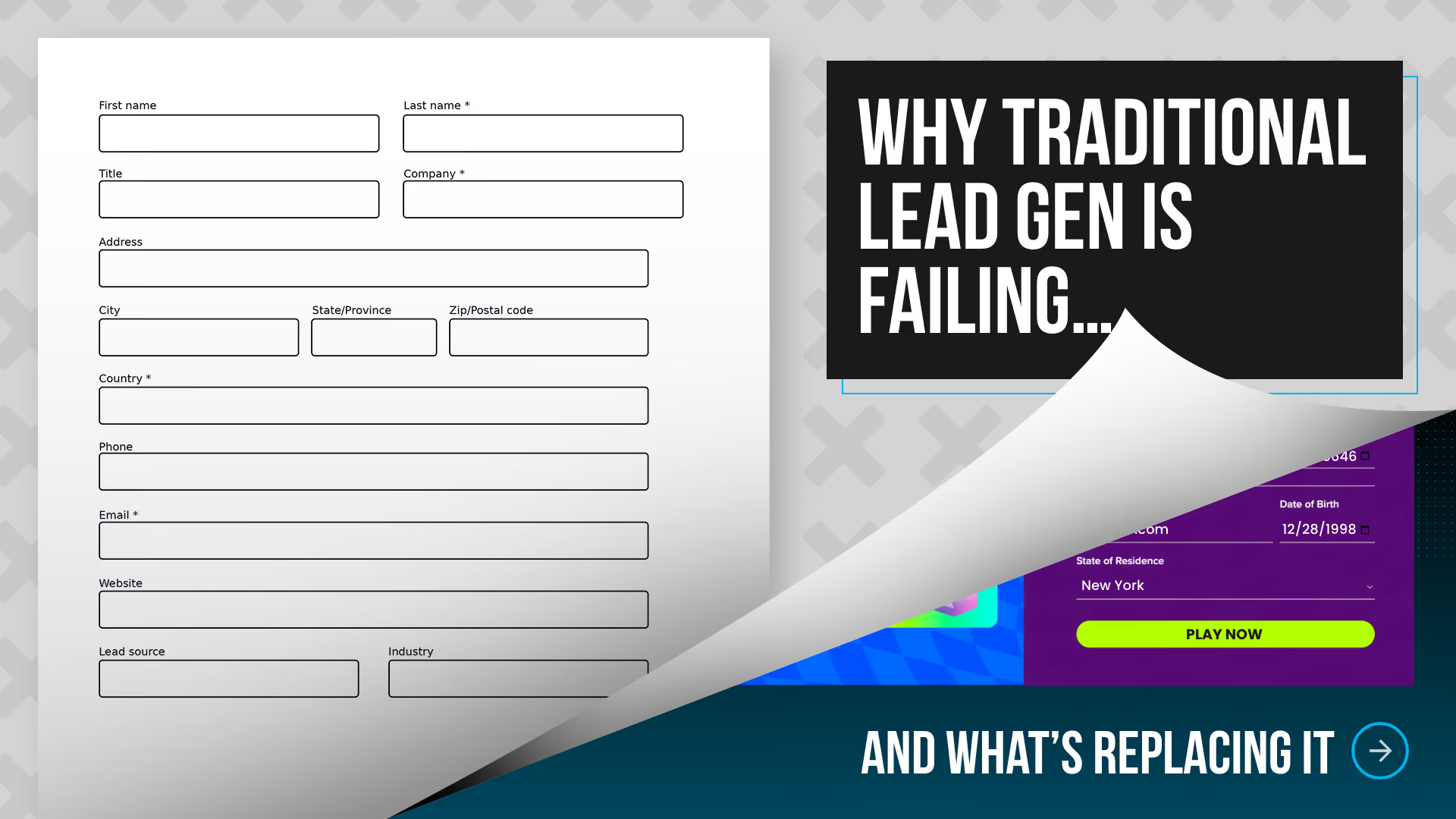
Forms. Gated PDFs. Static landing pages. For years, these were the backbone of digital lead generation. Build a page, gate a download, drive traffic, collect emails. Simple. In 2026, that system is now breaking.
Brands are spending more, converting less, and watching cost per lead climb - not because their messaging got worse, but because audience behavior changed.
Attention is scarce and scattered. Choice is infinite. And passive lead capture no longer earns engagement.
Why traditional lead generation is failing
Traditional lead gen relies on passive intent:
That worked when fewer brands were competing for attention, audiences trusted gated content by default, and CPLs were low enough to tolerate drop-off. But today, the reality looks different:
Audiences are oversaturated with ads and downloads, forms feel like friction, not value, engagement drops before data is ever captured, and CPL rises as brands fight over shrinking attention. In short? Asking for attention doesn’t work anymore.
What’s replacing it: gamified customer acquisition
The brands outperforming the market aren’t asking users to convert. In this increasingly competitive attention economy, they’re forced to earn attention first.
Gamified customer acquisition flips the model:
Quizzes, predictions, challenges, instant-win games, bracket competitions - these formats outperform because they create immediate value, trigger curiosity and reward loops and turn participation into data capture naturally.
When executed correctly, this approach consistently delivers 3–5X more leads than traditional campaigns. This isn’t by tricking users, but by aligning with how people actually behave online.
How brands generate leads with gamified marketing
At its core, gamified lead generation follows a simple sequence:
Instead of forcing conversion at the top of the funnel, brands pull users into an experience - and data capture becomes a byproduct of engagement, not the barrier to it.
This is why gamification works across all industries, including retail, QSR, finance, sports and media.
The mechanic changes; the psychology doesn’t.
What tools support gamified customer acquisition?
Not all “gamification tools” are created equal. Many point solutions offer:
What brands actually need is a platform that supports gamified acquisition as a system, not a stunt. That means tools must enable:
This is where platforms purpose-built for gamified acquisition outperform DIY tools or disconnected vendors.
What brands should look for in a gamification platform
When evaluating gamification software, high-performing brands look for:
This is exactly why frameworks like the 10-Day Gamification Playbook exist: to operationalize gamification so it’s predictable, repeatable, and scalable — not experimental.
The shift brands need to make
The future of lead generation isn’t about better forms or smarter gating.
It’s about designing experiences that people want to engage with, turning engagement into data, and treating gamification as an acquisition engine, not a novelty.
This is the model modern brands are moving toward - and the gap between those who adapt and those who don’t is widening fast.
WIT helps brands design, launch, and scale gamified customer acquisition campaigns.
If you want to see how leading brands execute this in practice, step by step, the full 10-Day Gamification Playbook breaks down the exact framework used to generate high-volume, repeatable leads with interactive campaigns.
